Decoding a CLS Strategy Model 1 Setup on USDCAD
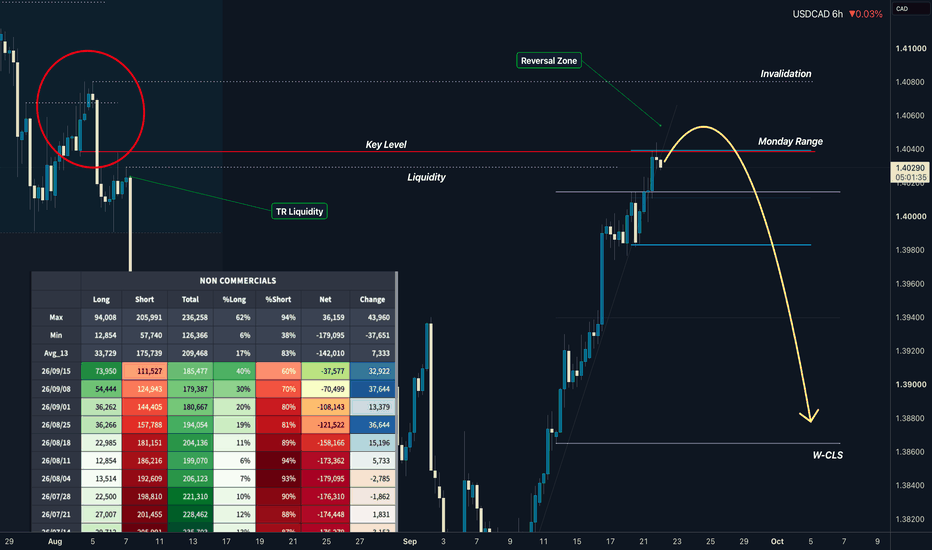
Unpacking the Narrative of a CLS Model 1 Trade
The language of a trading strategy can often seem cryptic to outsiders. Terms like "CLS Range," "CIOD," and "Model 1" can feel like a secret code. However, as shown in a recent USDCAD trade idea, these terms simply describe a clear and logical story of how markets often move. Let's break down the CLS strategy's Model 1 setup using this USDCAD example as our guide.
The CLS strategy is not a black-box system. It's a framework for reading institutional order flow. A Model 1 setup, as mentioned in the idea, follows a specific narrative with distinct phases.
Phase 1: Context and the CLS Range
Every trade story needs a setting. The context for this trade was a "Weekly Short Zone," a major area of resistance. Within this context, the analysis identified a "CLS Range."
- CLS Range: Think of this as a 'fair value' area or a zone of balance where price has been consolidating. It's the market's temporary home base. The strategy anticipates that price will eventually want to return here.
Phase 2: Manipulation
This is the plot twist. Before the market makes its real move, it often fakes out traders. In the USDCAD idea, this was the move up and into the Weekly Short Zone. The idea's text refers to "manipulation in to the Key Level."
- Manipulation: This is an engineered move designed to hunt liquidity. By pushing price above recent highs, it triggers stop-loss orders from early sellers and entices breakout buyers to jump in at the worst possible price. The CLS strategy views this not as a sign of strength, but as a preparatory phase for a reversal.
Phase 3: The Confirmation (CIOD)
This is the climax of the setup. After the manipulation, traders need proof that the reversal is actually starting. This is the "CIOD" or "Change in Order Flow."
- CIOD (Change in Order Flow): This is a specific, observable shift in market structure on a lower timeframe. As price pushes up during manipulation, it creates a series of higher highs and higher lows. The CIOD is the first decisive break of that pattern—a lower low followed by a lower high. It's the market's signal that sellers are now in control. The trade idea emphasizes waiting for this signal: "we need to see a confirmation switch."
Phase 4: Expansion
Once the CIOD confirms the reversal, the final phase begins.
- Expansion: This is the strong, directional move away from the manipulation zone. The sellers, having taken control, now push the price back down towards the area of value—the CLS Range. The target for the trade, "50% of the CLS range," is a logical point within this expansion phase.
This four-part story—Context, Manipulation, Confirmation, Expansion—is the essence of a CLS Model 1 setup. It provides a repeatable blueprint for identifying high-probability reversals. While the concepts are straightforward, learning to identify them in the fast-paced live market is a skill. This is where guidance from a trading coach who specializes in this method can accelerate a trader's learning curve, turning theory into practical, real-time application.
WRITTEN BY
David Perk
Full-time forex trader and mentor. $1M+ verified track record on FX Blue. Teaches the CLS strategy to funded traders — live, five times a week.
Want to trade this alongside David?
Join the community — livestreams 5× a week, trade breakdowns, and entries called in real time. Your first week is free, full access to every paid feature.
Join the community — first week freeNo experience needed. Cancel anytime.