How to Trade a USDJPY Bearish Reversal Structure
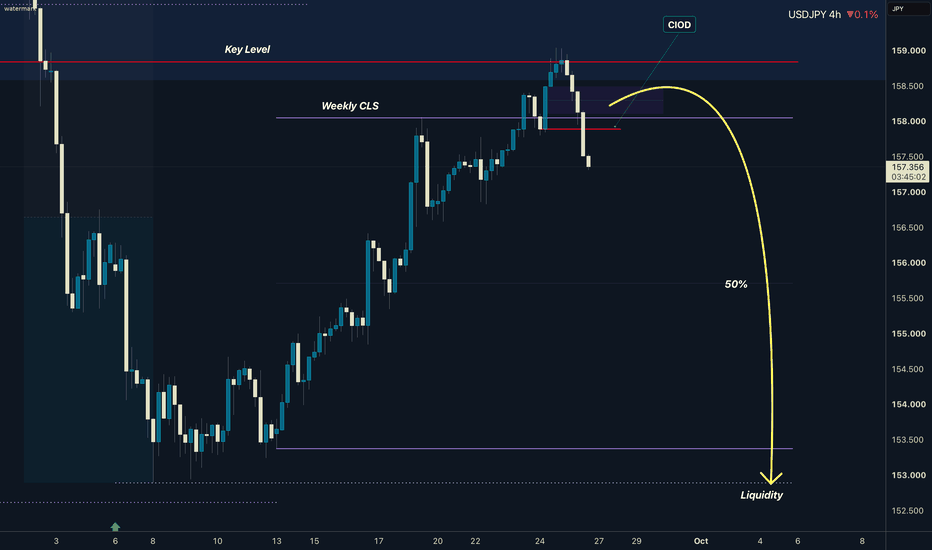
A Practical Guide to Spotting Bearish Setups
Many aspiring traders see a chart and feel overwhelmed. Where do you start? A recent USDJPY analysis based on the CLS strategy provides an excellent template for a systematic, step-by-step approach to identifying and planning a potential short trade. This article will walk you through how to apply this logic yourself.
Disclaimer: This is for educational purposes only and not financial advice. The goal is to learn a process, not to follow a signal.
Step 1: Identify the Higher Timeframe Range
Before you even think about a trade, you need context. On a chart like the 4-hour, look for a clear area of consolidation—a sideways price action with a defined high and low. This is what the source idea calls the "CLS Range."
- Action: Draw horizontal lines at the swing high and swing low of this consolidation. This box is your playing field. Price action inside is balanced; moves outside are significant. A key part of any effort to learn forex trading is mastering the art of identifying these important zones.
Step 2: Watch for the "Manipulation" Move
One of the most common traps in trading is the false breakout. In a bearish scenario like the one for USDJPY, this involves price pushing decisively above the range high you just identified. Amateur traders see this as a reason to buy, expecting the price to keep going up.
- Action: Instead of buying, watch this move with suspicion. Does it quickly lose momentum? Does it fail to find acceptance above the old high? This move is often designed to hunt for liquidity. A good forex mentor will teach you to question breakouts rather than blindly follow them.
Step 3: Wait for Reversal and Confirmation
A failed breakout alone is not enough. You need proof that sellers are taking over. The USDJPY idea calls this confirmation a "CIOD" or "Change in Order Flow."
- Action: After price returns back inside the range, look for a break of a recent, significant swing low. This indicates that the market is no longer making higher lows and higher highs. The short-term uptrend is broken. This shift from bullish to bearish order flow is your primary confirmation signal that the manipulation phase is over and an expansion lower may begin.
Step 4: Plan Your Entry, Stop Loss, and Target
With confirmation in hand, you can now structure the trade. A plan separates professional execution from gambling.
- Entry: As the idea suggests, wait for a candle to close below the confirmation level (the broken swing low). This ensures the market has committed to the direction and you aren't just trading a volatile spike.
- Stop Loss: Place your stop loss above the high of the manipulation move. If the price goes back up there, your entire trade thesis is invalidated, and you should be out of the trade with a small, managed loss.
- Take Profit: A logical first target is the midpoint (50%) of the larger range you identified in Step 1. This is an objective level that doesn't rely on hope or greed.
By following these steps, you build a complete, logical plan for every trade. It's this kind of procedural thinking that a dedicated trading coach instills to build lasting consistency.
WRITTEN BY
David Perk
Full-time forex trader and mentor. $1M+ verified track record on FX Blue. Teaches the CLS strategy to funded traders — live, five times a week.
Want to trade this alongside David?
Join the community — livestreams 5× a week, trade breakdowns, and entries called in real time. Your first week is free, full access to every paid feature.
Join the community — first week freeNo experience needed. Cancel anytime.