Learn Forex Trading: A Beginner's Guide to EURUSD Analysis
Understanding Professional Chart Analysis
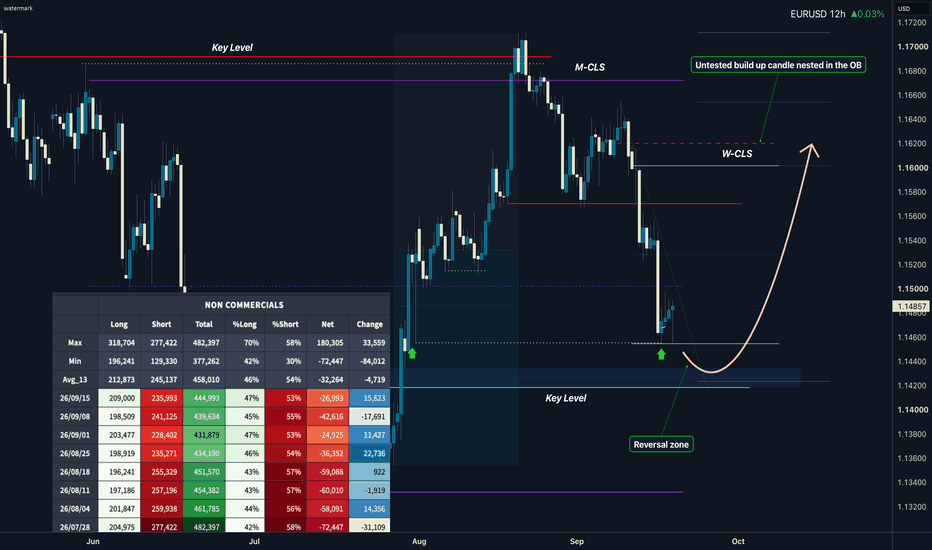
When you first start to learn forex trading, a professional's chart can seem both simple and impossibly complex. Take this recent analysis of EURUSD on the 12-hour timeframe. A trader might see a title like "Big up swing is forming" and assume it's a simple prediction. However, professional traders don't predict; they prepare based on a structured, logical framework. This chart isn't a crystal ball—it's a high-probability scenario based on a specific trading model.
For a beginner, the path to understanding this level of analysis is a core part of a comprehensive forex education. It starts with breaking down the terminology and seeing the market not as random noise, but as a continuous story of supply and demand.
Deconstructing the EURUSD Setup
Let's unpack the key elements mentioned in the analysis to see what a developing trader should focus on. This is the logic that underpins a consistent strategy.
Key Concepts for Beginners:
- CLS Range: Think of this as a clearly defined 'zone of interest'. It's a price range where a trader anticipates a significant battle between buyers and sellers will take place. Learning to identify and draw these ranges is a fundamental skill.
- Manipulation: This is a crucial concept. Before a big move, price will often spike in the opposite direction to trigger stop losses and fool traders into taking the wrong side. In the EURUSD example, the analysis looks for price to dip below the CLS range in a manipulative move before heading higher.
- CIOD (Change in Order Flow): This is the confirmation. After the manipulation, traders need proof that the market's intention has actually shifted. A CIOD is a specific change in price action that signals the manipulators are done and the real move—the "expansion"—is about to begin.
- Patience and Confirmation: Notice the instruction to "enter only after candle close." This isn't a minor detail; it's a rule of engagement. Amateurs jump in based on feeling; professionals wait for the market to confirm their thesis.
A Roadmap for Your Forex Education
Seeing one chart is insightful, but it doesn't make you a trader. A structured forex education builds the skills to find these setups yourself. Here’s a logical learning path:
- Master the Basics: Before anything else, understand market structure (highs and lows), support and resistance, and what candlestick patterns truly signify.
- Understand Market 'Why': Move beyond basic patterns to learn about liquidity. Why does price move to certain levels? Understanding concepts like manipulation is key to not being a victim of it.
- Learn a Specific, Rule-Based Strategy: This is where a method like the
CLS strategycomes in. A complete strategy provides rules for entry, exit, and trade management, removing guesswork. - Prioritize Risk Management: As the analysis states, "Risk Control is Key to Long Term Success." This is the least exciting but most important part of trading. Without it, even the best strategy will fail.
Learning to analyze the market like a professional is a journey of deliberate practice. It requires moving past simple indicators and embracing the underlying logic of price action. While challenging, this path is what separates casual speculators from career traders. Finding a forex mentor can significantly shorten the learning curve, providing guidance and structure to this process.
WRITTEN BY
David Perk
Full-time forex trader and mentor. $1M+ verified track record on FX Blue. Teaches the CLS strategy to funded traders — live, five times a week.
Want to trade this alongside David?
Join the community — livestreams 5× a week, trade breakdowns, and entries called in real time. Your first week is free, full access to every paid feature.
Join the community — first week freeNo experience needed. Cancel anytime.