Learn Forex Trading: Deconstructing a DXY Reversal Setup
Understanding the Language of the Market
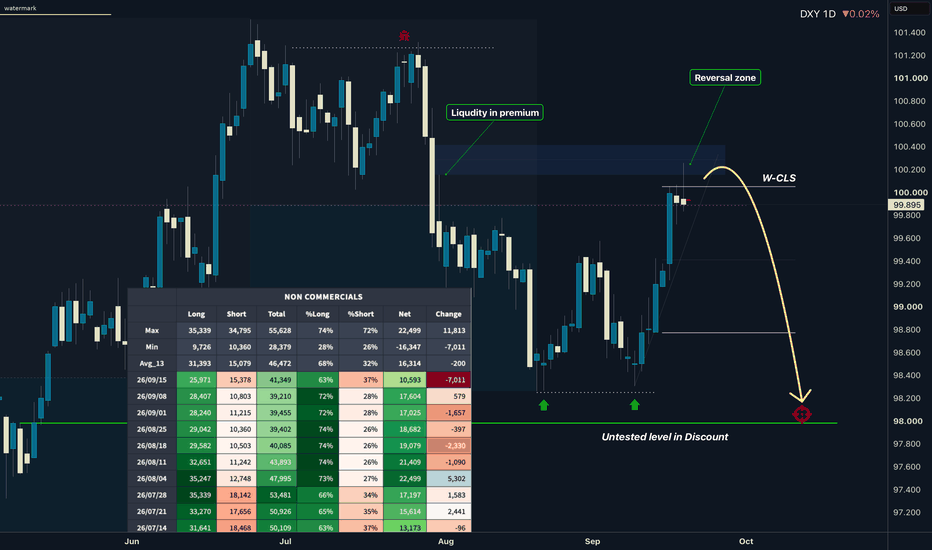
When you first look at a professional trader's chart, like David Perk's recent analysis on the US Dollar Index (DXY), it can feel like reading a foreign language. Terms like "CLS Range," "manipulation," and "CIOD" are not typically found in introductory forex books. However, understanding these concepts is a crucial step in your forex education journey, moving you from a beginner's perspective to a more nuanced understanding of price action.
Let's break down the core ideas from this DXY analysis to create a clear learning path. The goal isn't to take a trade, but to understand the logic behind it—a principle that should guide every step you take as you learn forex trading.
The Anatomy of a CLS Reversal Setup
The analysis hinges on the CLS strategy, which provides a framework for identifying high-probability setups. Based on the DXY chart, we can outline a sequence of events that a trader using this method looks for. This is the process you should focus on learning to identify.
1. The CLS Range
First, a "CLS Range" is established. Think of this as a defined area of consolidation where price is trading sideways. For a beginner, the first skill to develop is simply identifying these ranges on a chart. Where does price seem contained? This range becomes the reference point for the entire trade idea.
2. Manipulation Below the Range
Next, David mentions looking for "manipulation in to the Key Level, below the CLS range." This is a critical concept. Instead of price breaking out of the range and continuing, it dips below the range's low. Many retail traders might see this as a bearish breakout and sell. However, a professional interpretation is that this move is designed to engineer liquidity—to trip stop losses and entice sellers into the market before a potential reversal.
3. Reaction and Confirmation (CIOD)
After the manipulation, the trader waits for two things:
- Reaction: Price must show a clear rejection from the "Key Level" it dipped into. It stops falling and starts to push back up.
- Confirmation: This is the most important step. David calls it a "CIOD" or "Change in Order Flow." This is a specific shift in market structure on a lower timeframe that confirms the manipulation is over and buyers are stepping in. It’s the green light that signals the potential start of an upward "expansion."
Waiting for this confirmation, as David notes, requires patience. Impulsively buying the dip is gambling; waiting for a confirmed CIOD is strategic trading.
A Structured Path to Learning
As a new trader, your path should be structured around mastering these concepts one by one. Don't rush to find trade setups. Instead, open a chart of the DXY or any other pair and practice:
- Identifying Ranges: Can you spot clear consolidation ranges on the daily or weekly charts?
- Spotting Manipulation: Look for instances where price briefly dips below a range low (or above a range high) only to reverse sharply.
- Understanding Structure: Learn the basics of market structure (highs and lows) to begin to grasp what a "Change in Order Flow" might look like.
This methodical approach to forex education builds a solid foundation. A comprehensive trading course can accelerate this process, but the principle remains the same: learn the logic, practice identification, and prioritize understanding over profits.
WRITTEN BY
David Perk
Full-time forex trader and mentor. $1M+ verified track record on FX Blue. Teaches the CLS strategy to funded traders — live, five times a week.
Want to trade this alongside David?
Join the community — livestreams 5× a week, trade breakdowns, and entries called in real time. Your first week is free, full access to every paid feature.
Join the community — first week freeNo experience needed. Cancel anytime.