The Real Edge in Trading: A Masterclass in Risk Management
Why Your Entry Signal Doesn't Matter (As Much As You Think)
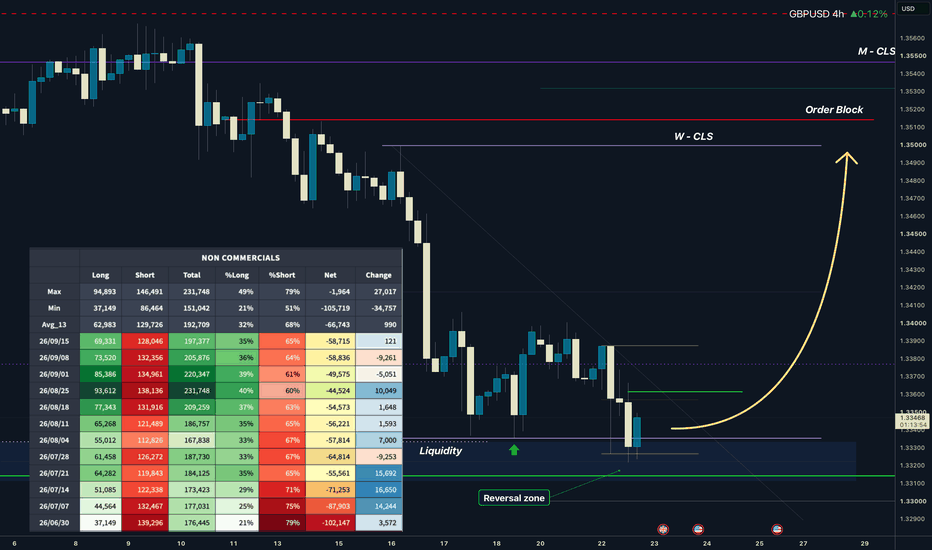
Traders are obsessed with finding the perfect entry. They spend countless hours searching for a holy grail indicator or pattern that will tell them exactly when to buy or sell. While a good entry helps, a recent analysis on GBPUSD serves as a powerful reminder of a far more important truth: your real, sustainable edge comes from risk management.
The trade idea was packed with warnings and principles about risk, and for good reason. As the note says, “Risk Control is Key to Long Term Success.” Let’s explore why.
Defining Your 'I'm Wrong' Point Before You Enter
The GBPUSD setup was a long idea based on a manipulation below a range. The logic dictates that for the trade to work, the price should not return to the extreme low of that manipulation.
This creates a natural, non-arbitrary place for a stop loss. The analysis implicitly guides you to place your stop below that low. This is Rule #1 of professional risk management: Know your invalidation level.
Before even thinking about how much you could win, you must define the exact point on the chart where your trade idea is proven wrong. This single action moves you from the world of gambling to the world of strategic speculation. A dedicated trading coach will hammer this point home until it becomes second nature.
The Mantra: Protect Capital First
Another key takeaway from the analysis was the simple but profound principle: “Protect Capital First.” Your trading capital is your business inventory. Without it, you are out of the game. Every decision must be viewed through this lens.
How does this apply to the GBPUSD trade?
- Position Sizing: Even with a perfect stop loss location, you must calculate your position size so that if the stop is hit, you only lose a small, pre-defined percentage of your account (e.g., 1%). A 50-pip stop means a smaller position size than a 25-pip stop to risk the same dollar amount.
- Understanding R:R: The target was 50% of the range. A professional trader would measure the distance to the stop and the distance to the target. If the potential reward isn't a sufficient multiple of the risk (e.g., at least 1.5:1 or 2:1), they might skip the trade, even if the setup looks good. Protecting capital means not taking trades with poor risk-to-reward ratios.
Staying Disciplined and Avoiding Emotional Decisions
The market is a master at manipulating emotions. After you enter a trade, every tick against you can feel like a personal failure, tempting you to move your stop. Every tick in your favor can bring on a feeling of greed, tempting you to cancel your target and hold for more.
The analysis explicitly warns: “Stay disciplined & avoid emotional trading.” This is risk management for your psychology. The rules you set before the trade—your stop loss, your target, your position size—were created by the rational, objective part of your brain. Your job during the trade is simply to execute that plan and prevent your emotional brain from sabotaging it.
This is a skill, and it requires practice. It's also why becoming a successful funded trader is as much about psychological fortitude as it is about strategy. Prop firms need to know you won't crack under pressure.
The next time you analyze a chart, shift your focus. Don't just look for the entry. Look for the invalidation point first. Calculate your risk. Define your exit plan. As the GBPUSD example teaches us, managing the downside is the only way to ensure you'll be around long enough to enjoy the upside.
WRITTEN BY
David Perk
Full-time forex trader and mentor. $1M+ verified track record on FX Blue. Teaches the CLS strategy to funded traders — live, five times a week.
Want to trade this alongside David?
Join the community — livestreams 5× a week, trade breakdowns, and entries called in real time. Your first week is free, full access to every paid feature.
Join the community — first week freeNo experience needed. Cancel anytime.